
Written by:
 Jayson Hardie – Chief Executive Officer- (636) 256-5712
Most people think about debt in simple terms: good debt or bad debt. But debt itself is really just a financial tool. What matters is what that debt does to your financial future.
Does it create more options, flexibility, and opportunity over time? Or does it make each month a little harder than the one before?
I like to think about it as two financial flywheels: the Flywheel of Good Debt and the Flywheel of Bad Debt. Both create momentum, but they move your finances in very different directions.
The real question is: Which one are you building?
The Flywheel of Bad Debt
Bad debt doesn’t always begin with bad decisions. Sometimes it starts with a medical bill, job loss, divorce, emergency repair, or simply not understanding how credit works.
Whatever the cause, the cycle can look something like this:
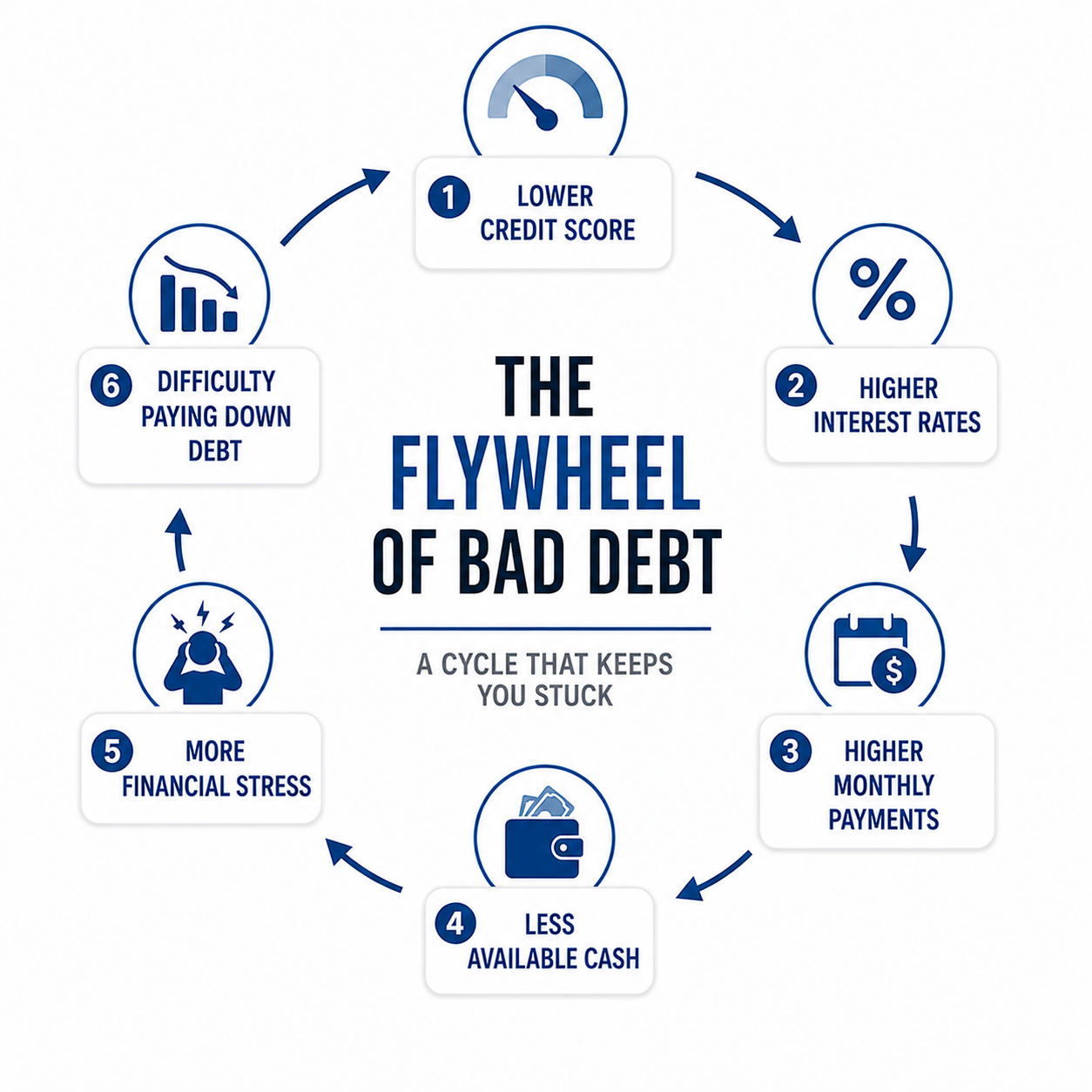
Lower Credit Score → Higher Interest Rates → Higher Monthly Payments → Less Available Cash → More Financial Stress → Difficulty Paying Down Debt → Lower Credit Score
And the cycle repeats over and over.
That’s one of the frustrating realities of personal finance. People with the least financial flexibility can end up paying the most to borrow money, which leaves them with even less flexibility going forward.
Once that flywheel gets moving, it can be difficult to change direction.
The Flywheel of Good Debt
Now consider what happens when the cycle moves the other way:
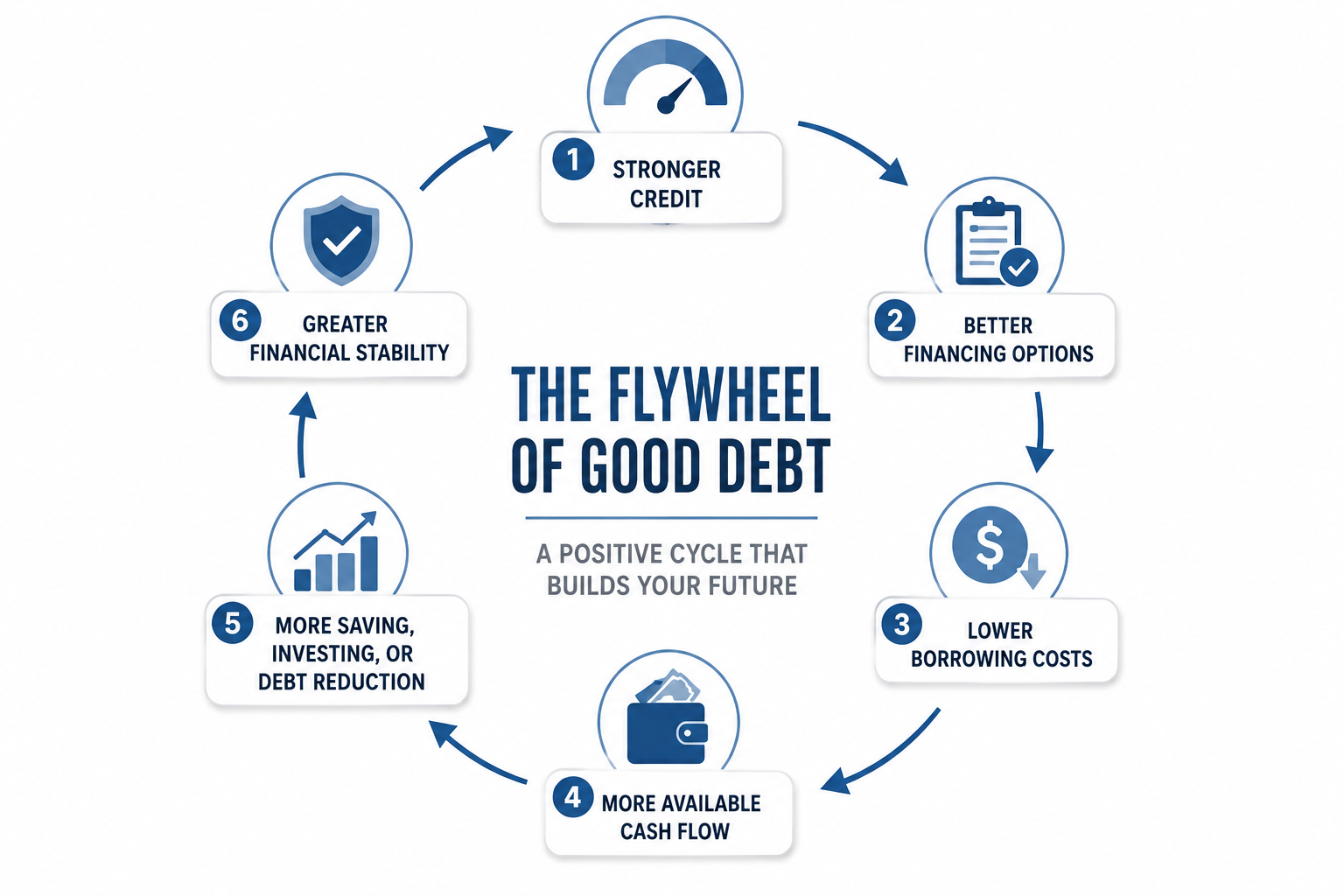
Stronger Credit → Better Financing Options → Lower Borrowing Costs → More Available Cash Flow → More Saving, Investing, or Debt Reduction → Greater Financial Stability
The benefit isn’t simply having a higher credit score. It’s what that stronger financial position allows you to do.
When you pay less interest, you keep more of your own money. That money can go toward building an emergency fund, investing for retirement, paying down other debt, purchasing a home, or creating more financial breathing room.
Over time, those decisions can begin reinforcing one another. That’s how positive financial momentum starts to build.
Homeownership Can Accelerate the Flywheel
For many families, homeownership can become an important part of that positive cycle.
Consider a fixed-rate mortgage. The principal and interest portion of the payment generally remains the same for the life of the loan, while renters may experience rent increases over time. If a homeowner’s income rises while that portion of the housing payment remains fixed, the payment may gradually consume a smaller percentage of household income.
At the same time, mortgage payments generally reduce the principal balance and build equity in the property. If the home appreciates over time, that can add to the homeowner’s equity as well, although appreciation is never guaranteed.
The growth might look like this:
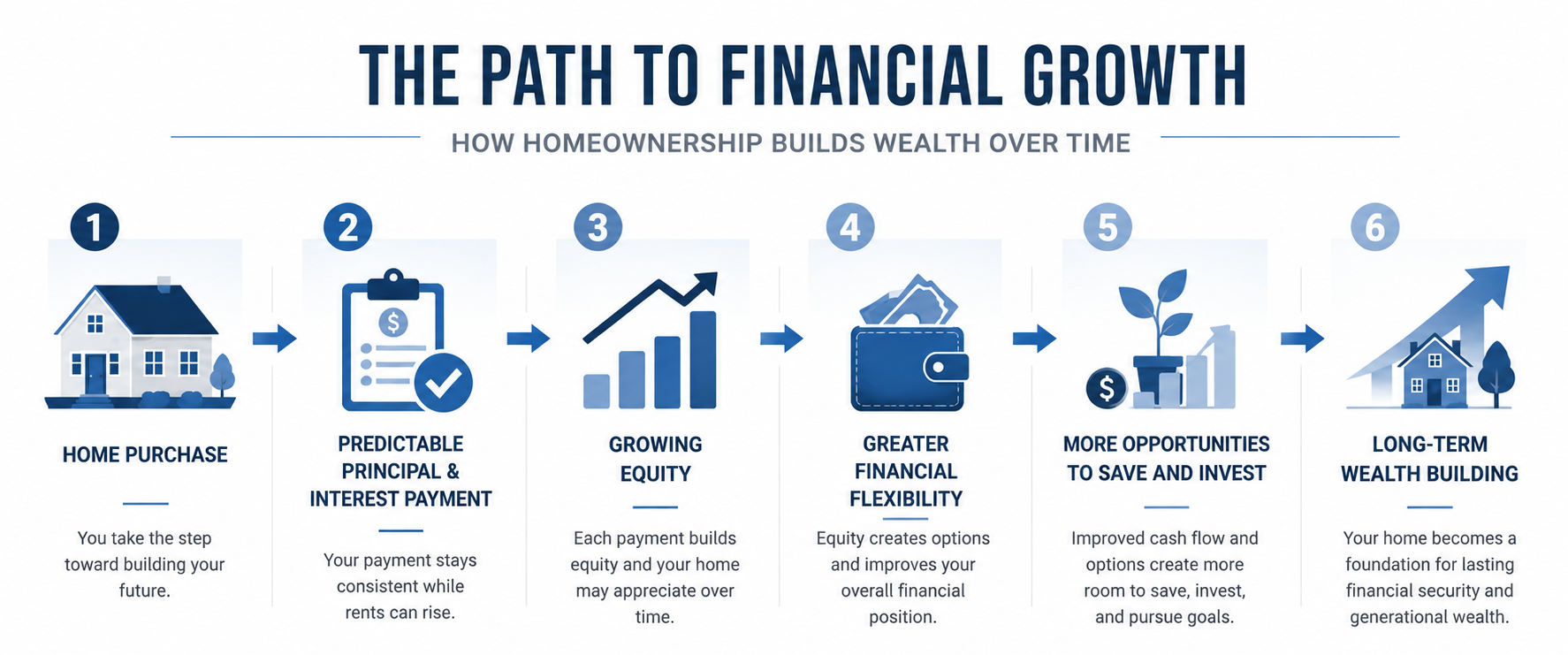
Home Purchase → Predictable Principal & Interest Payment → Growing Equity → Greater Financial Flexibility → More Opportunities to Save and Invest → Long-Term Wealth Building
Homeownership isn’t automatically the right financial decision for everyone. But when the home and financing fit a household’s budget and long-term plans, it can become more than a place to live. It can become part of a family’s financial foundation.
Home Equity Can Create Options
As homeowners build equity, they may also gain another source of financial flexibility. With sufficient equity, products such as a home equity line of credit, or HELOC, may allow a homeowner to borrow against a portion of it.
Depending on the borrower’s circumstances and market conditions, that financing may carry a lower interest rate than credit cards or some unsecured personal loans. That can be valuable when a major expense comes along.
Of course, that doesn’t mean homeowners should treat their equity like an ATM. A home secures the debt, so borrowing against it comes with real risk. The point is that a strong financial position can give you more options, and having better options is a big part of the good debt flywheel.
It Starts With Knowing Where You Stand
Most people know their income and monthly bills, but many don’t know their current credit score or how their debt could affect their borrowing costs and financing options.
Think of your credit score as your location on a financial map. Before deciding where you’re going, it helps to know where you’re starting. By talking with a loan advisor first in the process, you can get an idea of where you stand and what steps you need to take.
The Market Rate Isn’t Necessarily Your Rate
When people hear about “mortgage rates,” it’s easy to assume everyone has access to the same rate. But broader market conditions are only part of the equation.
Your rate is determined by your credit profile, loan program, down payment, debt-to-income ratio, and other factors. Knowing the difference can help you understand whether you’re well positioned to borrow today or whether improving your financial profile could create better options.
The Right Mortgage Isn’t Just the Lowest Rate
Choosing the right mortgage is about more than chasing the lowest advertised rate. FHA may make sense for one borrower, Conventional for another, while other eligible borrowers may benefit from a VA or USDA loan.
Rate matters, but so do the monthly payment, upfront costs, mortgage insurance, and your long-term plans. The right mortgage is the one that fits your financial situation and your goals.
A Simple Example
Imagine two people purchasing similarly priced homes and earning similar incomes. One has excellent credit, while the other has credit challenges dating back several years.
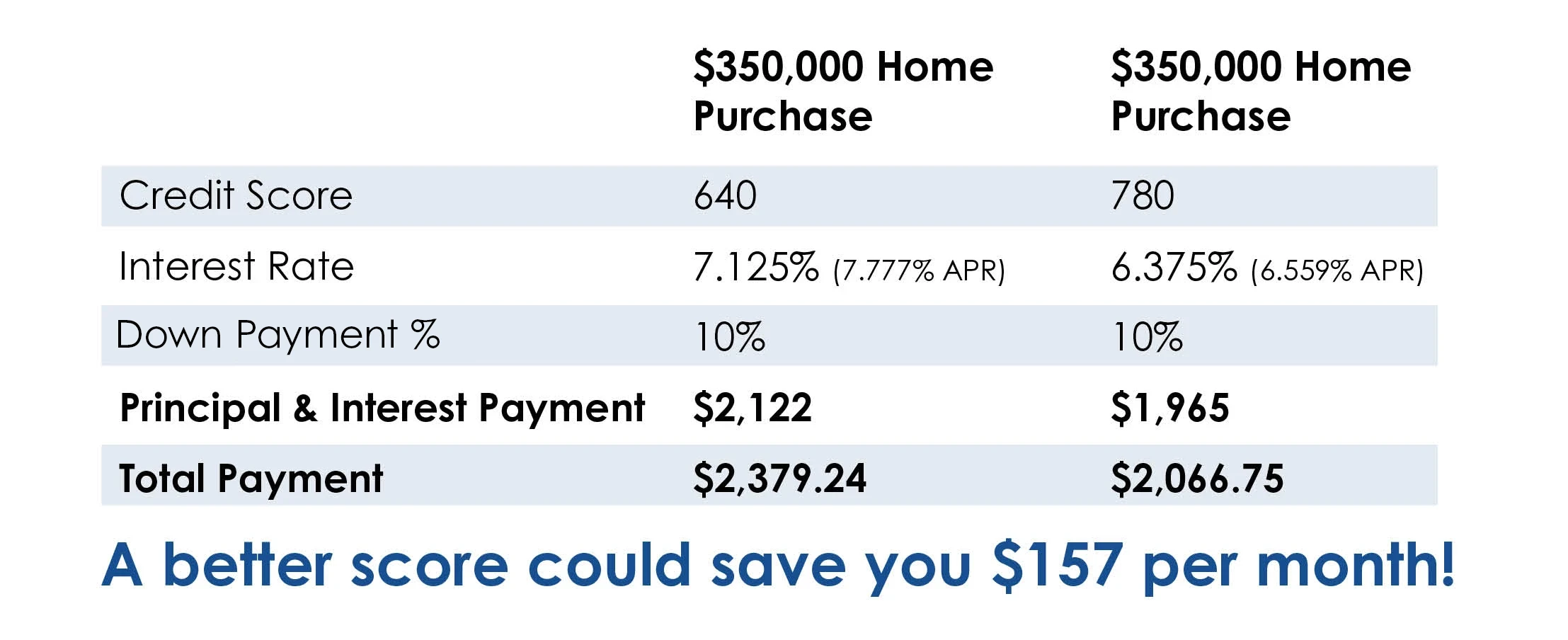
If the second borrower qualifies at a higher interest rate, the impact goes beyond the rate printed on the loan documents. A higher payment can mean less cash available each month for savings, investing, emergencies, or paying down other debt.
Multiply that difference over months and years, and you can see how borrowing costs can affect the bigger financial picture. That’s the flywheel at work.
Which Flywheel Are You Building?
Instead of asking only, “How much debt do I have?” I think there’s a better question: “What is my debt doing for or to me?”
Is your debt consuming future income through high interest and expensive payments? Or is it helping you create stability, acquire assets, improve cash flow, and build wealth over time? That’s ultimately the difference between the two flywheels.
The bad debt flywheel can make financial progress harder, while the good debt flywheel can create more opportunities to save, invest, reduce debt, and build wealth. For many families, responsible homeownership can become part of that positive momentum through a predictable mortgage payment and the opportunity to build equity over time.
The important thing to remember is that your current flywheel doesn’t have to be your permanent one. Paying bills on time, reducing revolving balances, understanding your credit, building savings, and making smarter financing decisions can all begin to change its direction. None of those decisions is dramatic on its own, but that’s how flywheels work. Small improvements, repeated consistently, create momentum.
So, ask yourself: Which flywheel are you on today, and what’s one decision you can make to start moving it in the right direction?
Because building wealth isn’t only about how much you earn. It’s also about the financial momentum you create with what you have.