You chose a fixed-rate mortgage. Your interest rate hasn’t changed. So why did your monthly mortgage payment suddenly go up?
This situation catches a lot of homeowners by surprise, especially when they thought choosing a fixed-rate mortgage meant locking in the same payment for the life of the loan.
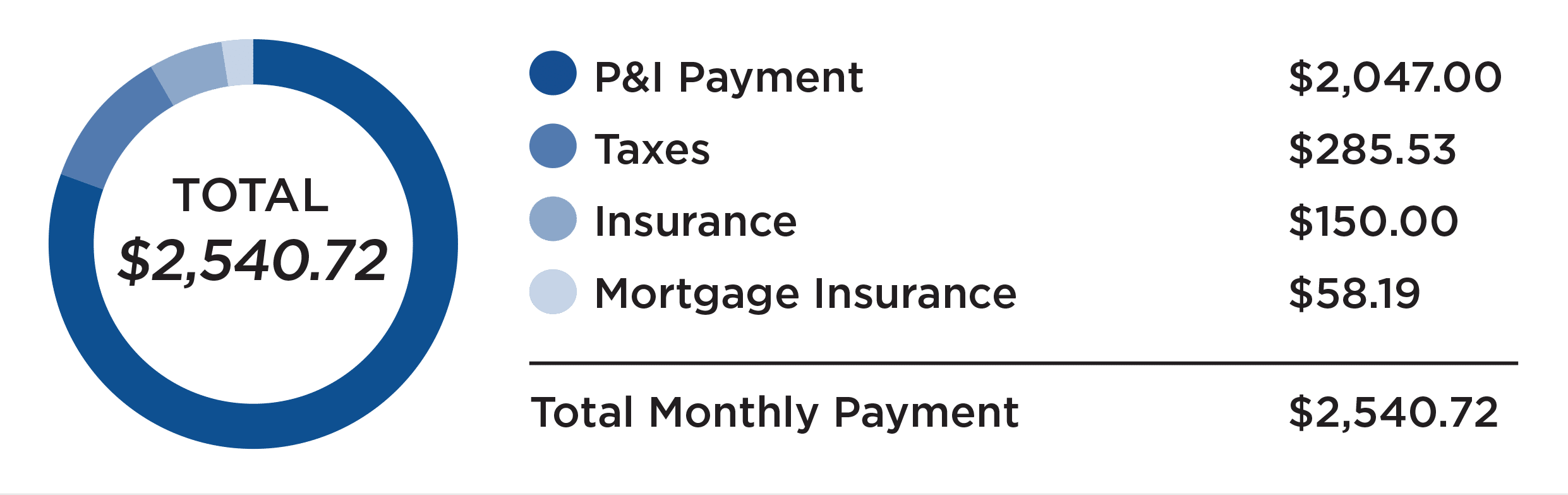
The important thing to understand is that your interest rate is only one part of your total mortgage payment. With a typical fixed-rate mortgage, the principal and interest portion of your payment generally remains consistent. But your total monthly payment may also include property taxes, homeowners insurance, and mortgage insurance. Some of those expenses can change over time.
If you’ve recently received notice that your mortgage payment is increasing, there are a few common reasons why. More importantly, you may be able to do a few things about it.
Your Property Taxes Increased
If your property taxes are paid through an escrow account, your mortgage servicer collects a portion of your estimated annual tax bill with each monthly payment. When the tax bill comes due, the servicer uses the money that has accumulated in your escrow account to pay it.
If your property taxes increase, the amount being collected each month may need to increase too.
For example, if your annual property taxes increase by $600, that’s another $50 per month that needs to be collected to cover the new tax bill.
$600 ÷ 12 months = $50 more per month
Your mortgage rate didn’t change, and the increase isn’t additional interest. The cost associated with owning the property changed.
If your taxes increased significantly, it may also be worth finding out why. Depending on where you live, property taxes can change because of changes in tax rates, assessments, property values, or the expiration of an exemption. If you believe your property’s assessed value is incorrect, your local taxing authority may have a process for reviewing or appealing the assessment.
Your Homeowners Insurance Premium Increased
Homeowners insurance is another common reason a mortgage payment can change.
If your insurance is paid through escrow and your insurance company raises your annual premium, your servicer must start collecting enough to cover the new premium when the next bill comes due.
Suppose your homeowners insurance premium was $1,800 per year and increased to $2,400. That’s a $600 annual increase, or about $50 per month.
But before accepting the higher premium, review your insurance renewal and see what changed.
Your premium could have increased because the insurer raised rates in your area, the estimated cost to rebuild your home increased, your coverage or deductible changed, you lost a discount, your claims history changed, or other factors affected how your insurer priced the policy.
If the increase is significant, this may be a good time to contact your insurance agent. Ask them to review your current policy, confirm your discounts and coverage, and explain what caused the increase. You may also want to compare coverage and pricing with other insurers.
If you shop for a new policy, make sure you’re comparing similar coverage, deductibles, and limits rather than simply choosing the lowest price. If you do switch, provide your mortgage servicer with the updated policy information so they can adjust your escrow account. A lower premium may reduce the amount that needs to be collected for insurance each month and, in turn, lower the escrow portion of your mortgage payment for the upcoming year.
You Have an Escrow Shortage
This is where payment changes can become a little more confusing.
Your mortgage servicer periodically reviews your escrow account to determine whether enough money is being collected to cover upcoming property tax and insurance bills. This is commonly called an escrow analysis.
The amount collected throughout the year was based on an estimate. If your actual taxes or insurance end up costing more than expected, your servicer may still pay those bills in full. That can leave your escrow account with a shortage.
When that happens, your payment may need to cover both the higher expenses going forward and the shortage created when previous bills were higher than expected.
For example, let’s say your property taxes and homeowners insurance increased by a combined $1,200 per year. Your servicer now needs to collect approximately $100 more per month to prepare for those higher bills going forward.
$1,200 ÷ 12 months = $100 more per month
But let’s say those increases also created a $1,200 shortage in your escrow account. If that shortage is being recovered over 12 months, another $100 per month could temporarily be added to your payment.
That means your monthly payment could temporarily increase by around $200 even though the ongoing increase in taxes and insurance works out to only $100 per month.
Can You Pay an Escrow Shortage Yourself?
Possibly, and this is an option worth asking your mortgage servicer about.
Depending on the shortage and your servicer’s procedures, you may be given the option to pay some or all of the escrow shortage in a lump sum instead of having it spread across future mortgage payments.
Using our example above, paying the $1,200 shortage upfront could potentially eliminate the temporary $100 monthly amount being collected to repay that shortage.
However, it is important to understand what paying the shortage doesn’t do. It doesn’t make the higher property tax or insurance bill disappear.
If your ongoing taxes and insurance now cost $1,200 more per year, your servicer still needs to collect approximately $100 more each month to prepare for those future bills. Paying the shortage could prevent your payment from increasing by the full $200 in our example, but the payment may still increase by around $100 because the underlying expenses are now higher.
Paying an escrow shortage can address what you owe from the previous period. It doesn’t necessarily eliminate the higher amount needed for future taxes and insurance.
Your Mortgage Insurance Could Affect Your Payment Too
Mortgage insurance can also be part of your total monthly mortgage payment.
For many Conventional mortgages, private mortgage insurance, or PMI, may be required when a borrower purchases a home with a smaller down payment. Unlike property taxes and homeowners insurance, however, PMI isn’t necessarily something you’ll pay for the entire life of the loan.
For many Conventional mortgages on a primary residence, homeowners may be able to request PMI cancellation once the principal balance is scheduled to reach 80% of the home’s original value, provided certain requirements are met. PMI generally must automatically terminate when the loan is scheduled to reach 78% of the home’s original value if the borrower is current.
Other loan programs have different mortgage insurance requirements, so these rules don’t apply to every mortgage.
If you’ve owned your home for a while and still have mortgage insurance included in your payment, it may be worth contacting your servicer to find out what type of mortgage insurance you have and what requirements apply to removing it.
Can Your Mortgage Payment Ever Go Down?
Yes. The same types of changes that can cause your total payment to increase can sometimes cause it to decrease.
Your property taxes or homeowners insurance could decrease. An escrow shortage could be fully repaid. Your escrow analysis could determine that less money needs to be collected each month. If you have eligible Conventional PMI, it could eventually be removed.
There may also be things you can proactively investigate. If your homeowners insurance increased significantly, review the policy with your insurance agent. If your property assessment appears incorrect, find out whether your local taxing authority provides an appeal process. If an escrow shortage is responsible for part of the increase, ask your servicer whether you have the option to pay it upfront.
Not every increase can be eliminated, but understanding exactly what changed gives you a much better idea of which parts of the payment you may actually be able to do something about.
What Should You Do If Your Mortgage Payment Changes?
Start by reviewing your most recent mortgage statement, escrow analysis, and any notices you’ve received from your mortgage servicer. Instead of looking only at the new total, compare the individual pieces of your old and new payments.
Look for changes to your property taxes and homeowners insurance first. Then see whether your escrow analysis shows a shortage and whether part of the new payment is being used to repay it. If mortgage insurance is included, find out what type you have and whether it may eventually be eligible for removal.
If you still can’t determine where the difference is coming from, contact your mortgage servicer and ask them to walk you through the new payment. If insurance is responsible for the increase, your insurance agent should be your next call.
A Fixed Rate Doesn’t Always Mean a Fixed Total Payment
Choosing a fixed-rate mortgage provides predictability because your interest rate is fixed and your scheduled principal and interest payment generally remains consistent.
But that doesn’t necessarily mean the total amount leaving your bank account every month will never change.
Property taxes, homeowners insurance, escrow adjustments, mortgage insurance, and certain loan features can all affect the total amount you pay.
So, if you open a letter from your mortgage servicer and discover your payment is increasing, don’t automatically assume something happened to your interest rate. Take a closer look at each part of your mortgage payment to understand what changed, why it changed, and what you can expect going forward.