When shopping for a home, most buyers focus on two big numbers: the purchase price and the monthly mortgage payment. Both matter, but another factor can make a big difference in what you pay each month: your mortgage interest rate. Even a small difference in your rate can affect your monthly payment and the total amount of interest you pay over time.
But what if there was a way to lower that rate or reduce your mortgage payments? That’s where a mortgage rate buydown comes in. Rate buydowns can help make monthly payments more manageable, provide some financial flexibility during the first few years of homeownership, or create opportunities for long-term savings. Understanding what they are and how they work can help you decide whether this strategy makes sense for your homebuying goals.
What Is a Mortgage Rate Buydown?
A mortgage rate buydown is a financing strategy that uses an upfront payment to reduce your mortgage interest rate, lowering your monthly payments and saving on interest over the life of the loan. Depending on the type of buydown you choose, the benefit can last for the first few years or for the life of the loan.
Think of it as paying money upfront in exchange for a lower mortgage payment. Instead of simply accepting the interest rate and payment associated with your loan, a buydown allows you to adjust how much you pay and when you pay it. The money used for a buydown may come from you, the home seller, a builder, or another eligible source, depending on your loan program.
The two main types of mortgage rate buydowns are temporary buydowns and permanent buydowns. While both can lower your monthly payments, they work differently and serve different financial goals.
Temporary Rate Buydowns: Lower Payments Now
A temporary rate buydown reduces your monthly mortgage payments for a set period, typically the first one to three years of your loan. Once that introductory period ends, your payments increase to the full amount associated with your original mortgage interest rate.
One of the biggest benefits of a temporary buydown is the breathing room it can provide during the early years of homeownership. Buying a home comes with plenty of expenses beyond the mortgage itself, from moving costs and furniture to maintenance and unexpected repairs. Having a lower mortgage payment initially may give you more flexibility as you settle into your new home.
How Does a 2-1 Buydown Work?
A 2-1 buydown is one of the most common temporary buydown options. It reduces the effective interest rate used to calculate your payments by two percentage points during the first year and one percentage point during the second year. Beginning in the third year, you make the full payment based on the original interest rate for the remainder of the loan.
For example, let’s say you have a 30-year fixed-rate mortgage with a 7.50% interest rate. With a 2-1 buydown, your payments would look like this:
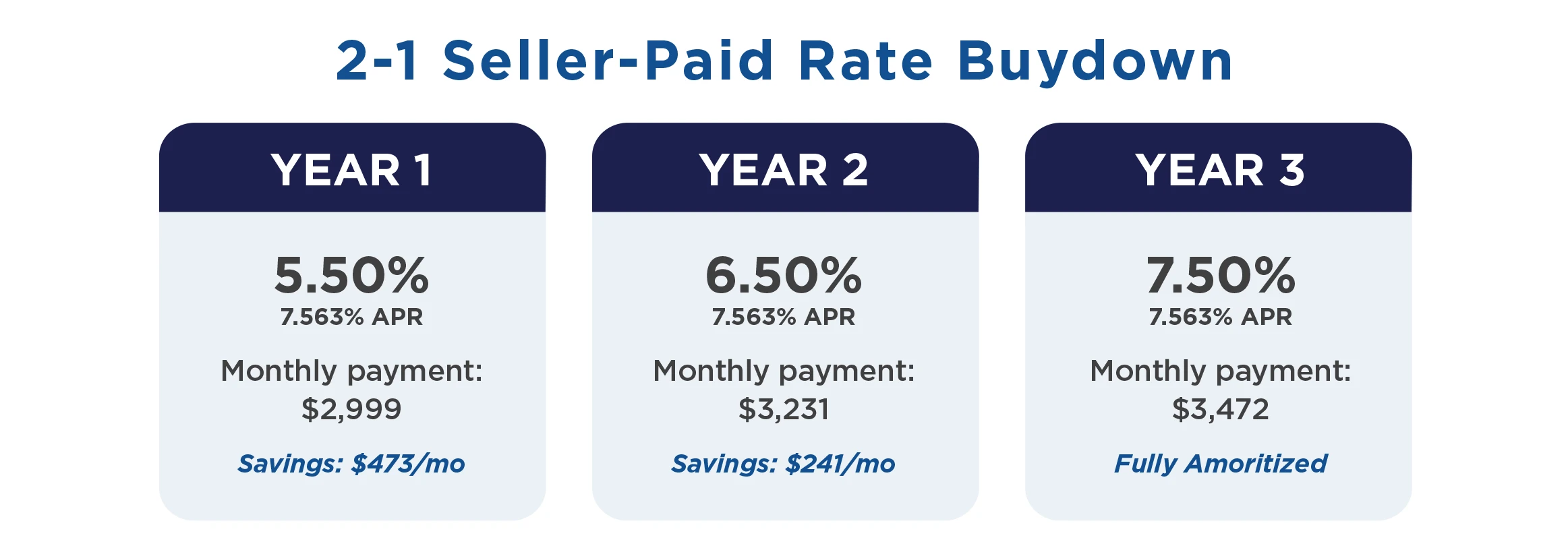
Example is based on a $450,000 purchase price, 20% down payment ($90,000), $360,000 loan amount, 740 credit score, and a 30-year fixed-rate conventional mortgage with a 7.50% note rate (APR to be confirmed). With a 2-1 temporary rate buydown, the first 12 monthly payments are $2,999 at a payment-equivalent rate of 5.50%, the next 12 monthly payments are $3,231 at a payment-equivalent rate of 6.50%, followed by 336 monthly payments of $3,472 at the 7.50% note rate. Monthly payments include estimated property taxes and homeowners insurance but exclude any applicable HOA fees. Actual payments may vary based on property taxes, insurance premiums, and other applicable costs. The information provided by Homestead Financial Mortgage is for educational purposes only. Loan programs, rates, and terms are subject to change without notice. Actual rates and eligibility may vary based on credit qualifications, down payment, loan type, and other factors.
The important thing to understand is that your actual mortgage interest rate is still 7.5%. The buydown doesn’t permanently change the terms of your loan. Instead, money is set aside upfront in a special account and used to cover the difference between your reduced payment and the full payment during the introductory period.
What About a 3-2-1 Buydown?
A 3-2-1 buydown works similarly but spreads the payment reduction over three years instead of two. Your payments are calculated using an effective rate, three percentage points below your original rate in the first year, two points below in the second year, and one point below in the third year. Your full payment begins in year four.
Both options offer temporary payment relief, but the longer and larger the reduction, the more money generally needs to be contributed upfront to fund the buydown.
What Happens When the Temporary Buydown Ends?
This is one of the most important things to understand before choosing a temporary buydown. Your monthly principal and interest payment will increase according to the agreed-upon schedule until it reaches the full payment amount. This isn’t a surprise rate adjustment or a change in your loan terms. It’s part of the original buydown agreement.
Because the full payment is known from the beginning, you can plan ahead. In fact, borrowers generally must qualify for the mortgage based on the full payment rather than the temporarily reduced amount.
It’s also important to remember that your total mortgage payment may include more than principal and interest. Property taxes, homeowners insurance, and mortgage insurance (when applicable) are separate expenses that can change over time. A rate buydown doesn’t eliminate those costs.
Permanent Rate Buydowns: Lower Rates for the Long Term
While temporary buydowns focus on reducing payments during the first few years, a permanent rate buydown is designed to provide a lower interest rate for the life of the loan.
This is accomplished through mortgage discount points, which are upfront fees paid at closing in exchange for a reduced interest rate. Unlike a temporary buydown, the lower interest rate is actually part of your mortgage terms and remains in place unless you refinance or pay off the loan.
One discount point typically costs 1% of your loan amount. For example, on a $300,000 mortgage, one point would cost $3,000. However, that doesn’t mean paying one point automatically reduces your interest rate by one percentage point. The amount of the rate reduction varies depending on the lender, loan program, and market conditions.
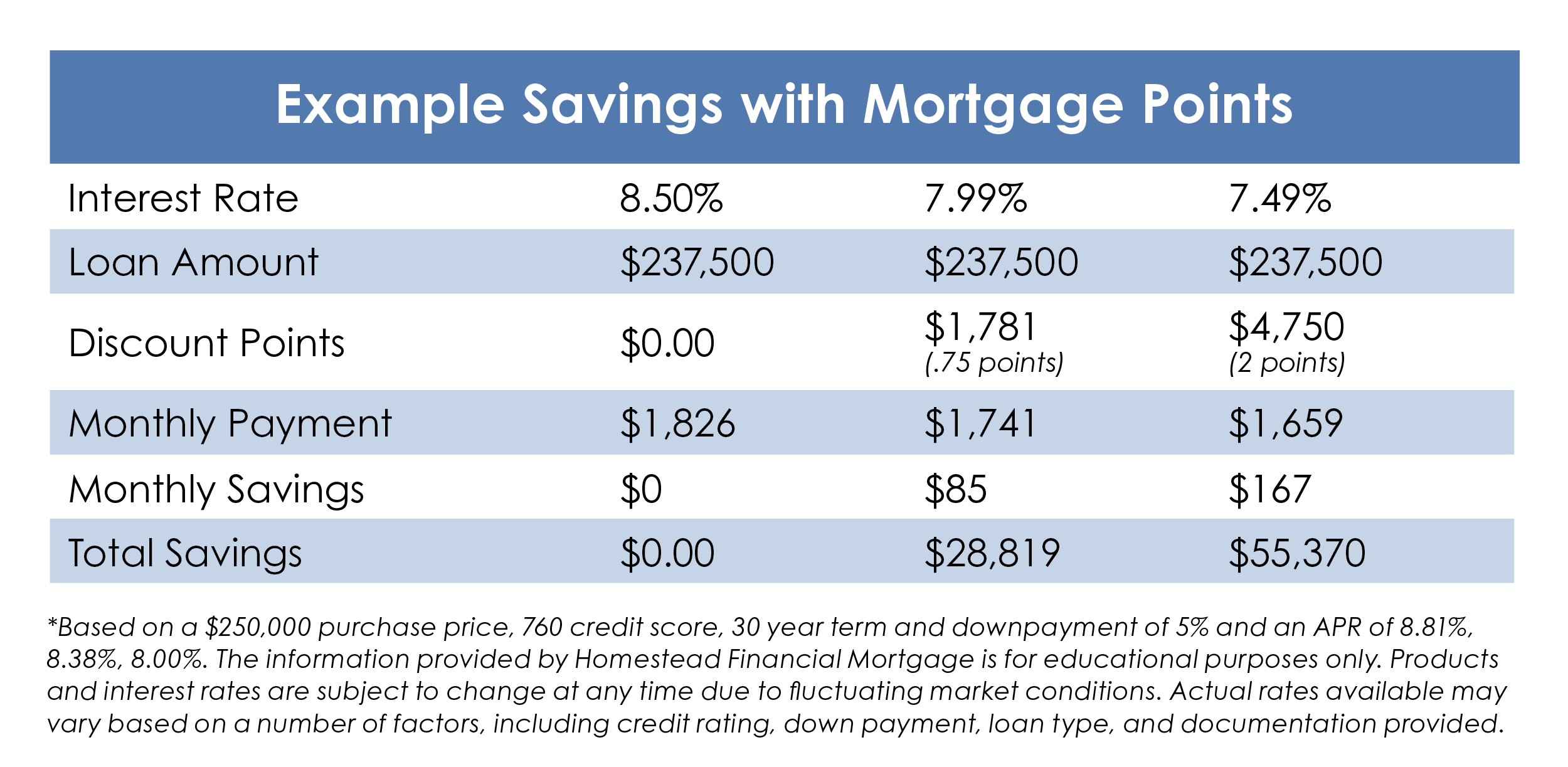
The advantage of a permanent buydown is that it can reduce your monthly principal and interest payment throughout the time you keep the mortgage. Over many years, those monthly savings can add up. However, because you’re paying an upfront cost to secure that lower rate, it’s important to consider how long you plan to keep the loan.
Understanding the Break-Even Point
When evaluating a permanent buydown, one of the most useful calculations is your break-even point. This tells you approximately how long it will take for your monthly payment savings to offset the upfront cost of the discount points.
For example, imagine paying $1,781 in discount points to reduce your monthly mortgage payment by $85. Dividing the $1,781 upfront cost by $85 in monthly savings gives you a break-even point of about 21 months, or just short of two years.
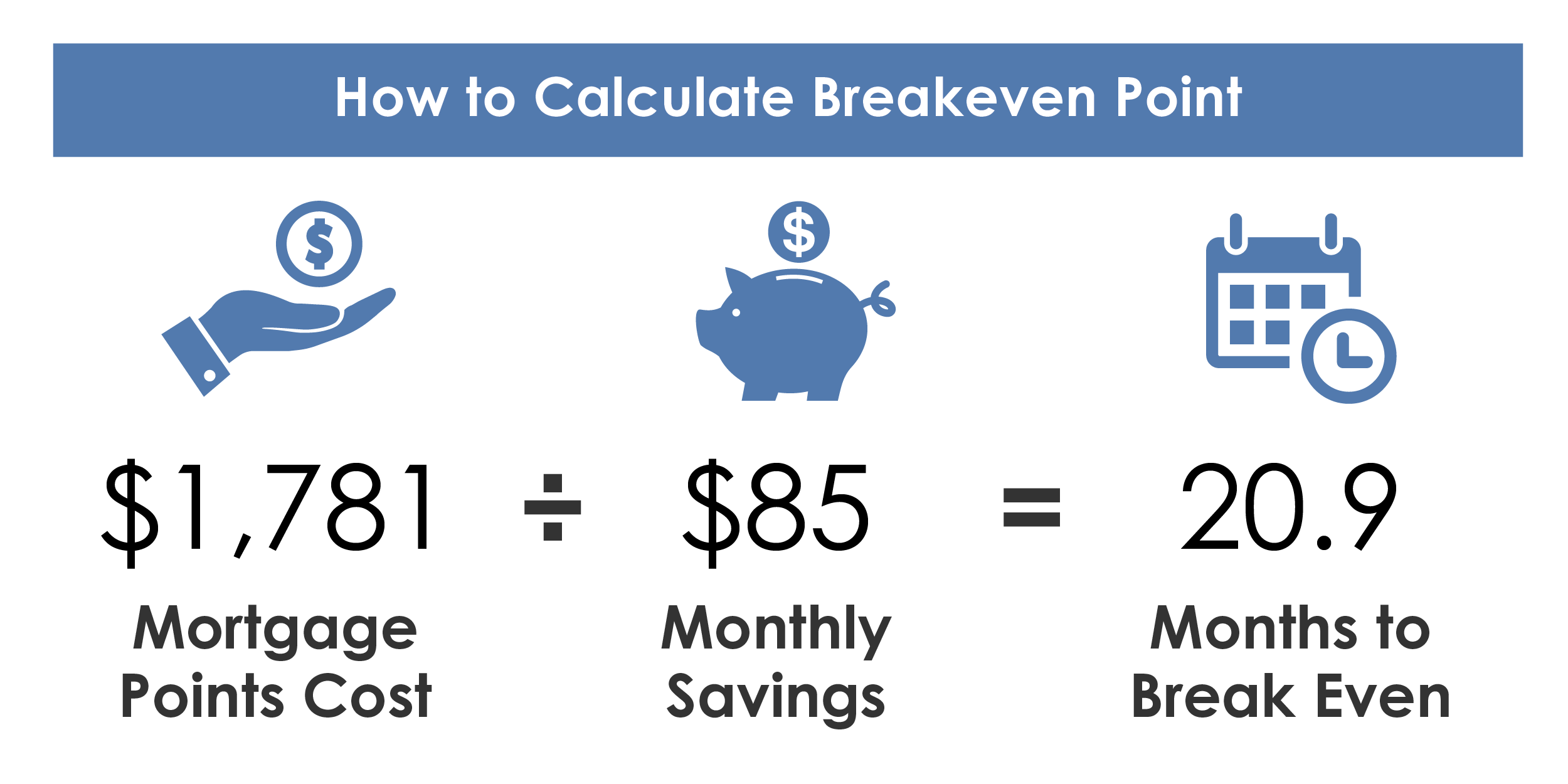
If you keep that mortgage longer than two years, you may come out ahead. If you sell or refinance before then, you may not recover the cost of those points through monthly savings.
Permanent buydowns can be particularly appealing to buyers who plan to remain in their homes for an extended period and don’t expect rates to fall enough to make refinancing worthwhile. Perhaps most importantly, their value may depend on who is paying for the buydown, especially when the seller is willing to cover the cost as a concession.
Why Who Pays for a Mortgage Rate Buydown Matters
Here’s something many homebuyers don’t realize: you don’t necessarily have to pay for a rate buydown yourself. Depending on the mortgage program and terms of the transaction, the cost may be covered by the buyer, seller, builder, or another eligible party.
A seller-paid buydown can become a valuable negotiating tool when purchasing a home. Instead of reducing the sale price, the seller may agree to contribute toward lowering the buyer’s mortgage rate. This can reduce the buyer’s monthly payment without changing the agreed-upon purchase price. This strategy may be especially appealing when mortgage rates are higher and easier to negotiate in a slower housing market, where sellers may be more willing to offer concessions. A rate buydown often will have a greater effect on the buyer’s monthly payment than a comparable reduction in the purchase price.
Builders may offer similar incentives on new construction homes. You might see advertisements promoting a reduced mortgage rate for the first year or two, or a lower long-term rate through builder-paid discount points. These incentives can be attractive, but it’s important to understand the terms, whether the offer requires a particular lender, and how the overall financing compares with other available options.
There are limits to how much sellers and other interested parties can contribute, and those limits depend on factors such as the loan program, down payment, and occupancy type. Our loan advisors can help you determine which contributions are permitted and how they can be applied, and they can help you decide if ultimately a lower price or a lower payment is more beneficial to your unique situation.
Let’s Find the Right Mortgage Strategy for You
When it comes to buying a home, no single financing strategy works for everyone. Rate buydowns are one of several options that may help you make the most of your homebuying budget, whether you want to lower your initial payments, reduce long-term interest costs, or take advantage of seller or builder incentives.
At Homestead Financial Mortgage, we believe understanding your options is just as important as finding the right loan. Our experienced loan officers can walk you through temporary and permanent buydowns, compare the numbers, and help you determine which approach best fits your financial goals.
Ready to explore your options? Contact Homestead Financial Mortgage today, and let’s find a mortgage solution that works for you.